

February 2023. I just had my first colonoscopy. Procedure went fine. They told me three things before they let me leave: don’t sign any legal documents, don’t operate heavy machinery, and don’t make any major life decisions.
That evening, Erin and I are on the couch. She’s scrolling Facebook and stops on a post from her coworker Ella. Puppies abandoned in the woods in Blackstone, Virginia. She shows me the pictures.
“Oh my God, they’re so cute. We should get one.”
Bad idea. That was my gut. Midnight wake-ups. Chewed furniture. Training that takes months. Vet bills that never end. We already have Montana, who’s getting older, and Oliver the cat. The house is settled. A puppy unsettles everything. And I knew that a lot of the work would fall on me.
But I looked at the pictures. And what I actually said was, “I have a hard time telling you no.”
“Does that mean yes?”
“I don’t know. I have to think about it.”
We sat with it the whole night. I thought about what saying yes would actually look like. Not the cute version. The 3am version. The one where I’m on my knees cleaning something unspeakable off the carpet and questioning every decision that led here.
The next morning, Erin was at work. I called her.
“Okay. I’m going to disagree and commit.”
She knew what that meant. Once the decision is made, you don’t spend the next year undermining it. You don’t complain. You don’t throw it back every time something goes wrong. You commit. Fully. Even when you didn’t want to.
“You’re not good at that,” she said.
“I know. That’s why I’m saying it now.”
Two conditions. I get to train him. And I get to name him. She said, “Deal.” Those were my terms. If I’m going to do this, I wanted to be all in. I sent my proposed name out to the family and everyone liked it.
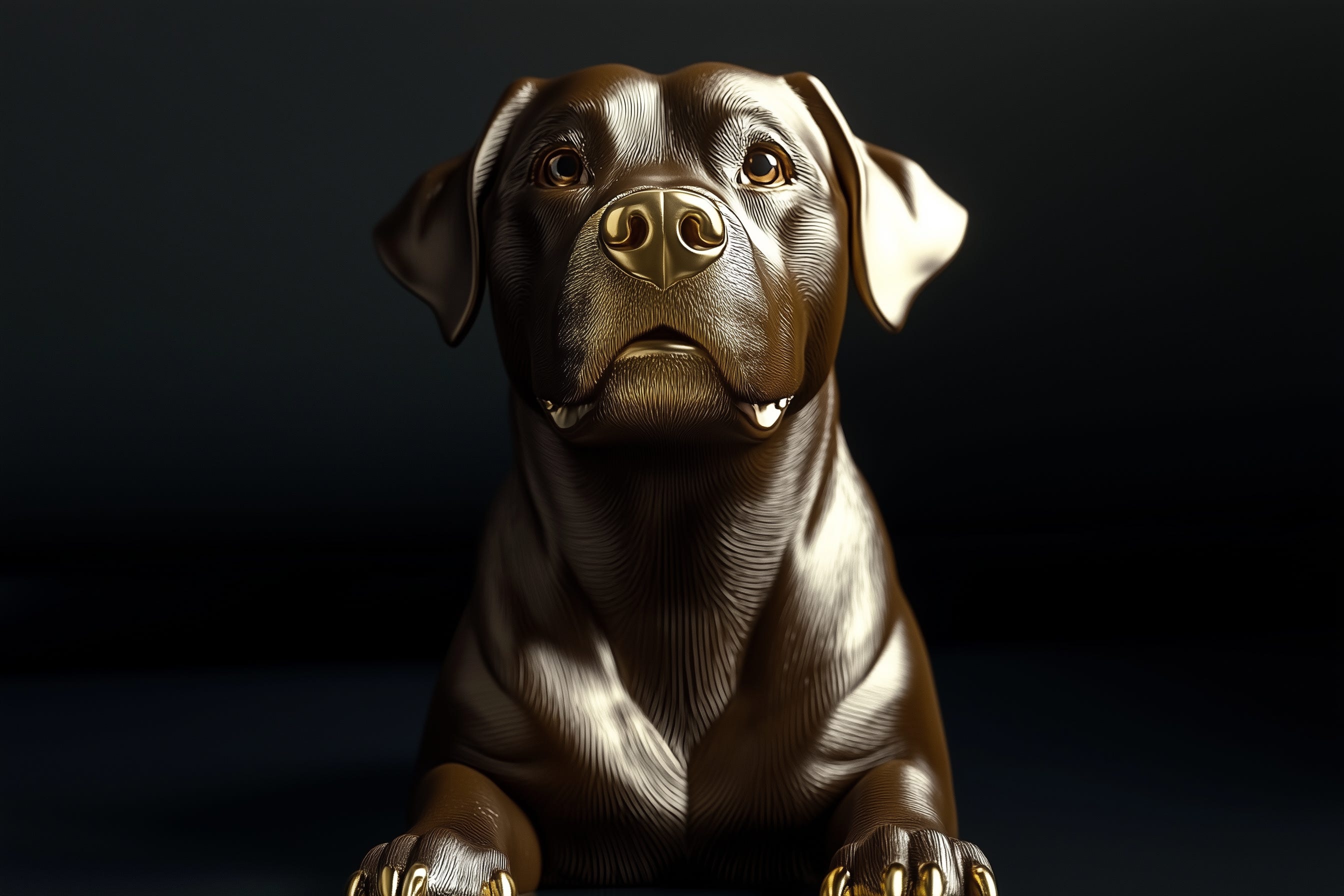
Went to PetSmart. Crate, collar, food bowls, leash, everything you need to bring a puppy into a house that wasn’t expecting one. Set it all up before she got home. By the end of the day, Erin walked through the door with him. About six weeks old, maybe fifteen pounds, and already too big for what six weeks should look like. This fuzzy, oversized ball of paws and ears. The kind of cute that makes the argument you just had feel stupid.
He was a rescue in the truest sense. Not a shelter with paperwork and a fee. Somebody dumped him in the woods with a few other dogs and walked away. We don’t know everything about where he came from. Some of what we’ve learned since tells us it wasn’t kind. But when he looked up at you with those eyes, that part of the story stopped mattering. He was ours now.
First thing I did was build a system. Crate downstairs for the day. At night, a little dog bed next to ours with the leash looped around the bed frame so he’d stay close. He didn’t cry. Didn’t whine. But we’d take turns getting up two, three times a night to take him outside. For the first month and a half it was like having a newborn. You don’t sleep through the night. You just stop expecting it.
I started weighing him every Monday morning. First weigh-in: 17.3 pounds. I charted it. Every single week, a new dot on a line that went almost perfectly straight up. End of February, 21. Mid-March, 28. June, 65. The vet told us early on he’d be big. I asked what that meant. “Like 60 pounds?” She said probably 80. She was not close. He topped out just over a hundred.
We had him DNA tested. One-third Rottweiler, one quarter Weimaraner, about 15% pit bull and lab, and a handful of other things mixed in. Rottie body, Weimaraner legs. Tall, fast, and way smarter than is convenient.
He’s a food thief. A silent one. Just the other day I put a hamburger on a plate, walked to the sink, turned around, and the plate was empty. No sound. No evidence. A hundred pounds of stealth. He can reach any counter in the house, and he will take anything you leave unguarded. You learn fast. Push everything to the back. Never turn your back. Ever.
He’s also my gym buddy. I work out in the garage, and some mornings he walks to the door and bumps the doorknob with his nose. That’s his signal. When he’s in there with me he goes in and out through the back door to the yard, and between sets I’ll look up and see his face in the window, standing on his back legs, watching me through the glass. I’ve got pictures of him sitting next to the weight rack looking like he’s about to start his own program.
I built custom gates to keep him in the office area while I work from home. He figured out the latch. Opened it himself. So I put a carabiner clip on it. He hasn’t cracked that one yet. I give him time.
The bunnies are another story. There’s a nest under the shed in the backyard, and for a dog his size he is shockingly fast. He caught a baby bunny once, carried it around in his mouth, set it down on the grass, and nosed it. Nudged it with his snout like he was trying to get it to run again. I don’t think he means harm. The chase is the point. I picked the bunny up, cleaned it off, and set it back near the nest. He watched me with his head tilted like I’d just ended the best game he’d ever played.
We said he wouldn’t get on the couch. We said he wouldn’t get on the bed. Then one day Erin let a puppy sit in her lap. He’s not a puppy anymore. He’s a hundred-pound dog who sleeps between us every night and takes up more of the bed than either of us do. The rules you set before you love something don’t survive contact with actually loving it.
Before he showed up, I had a system that was working. Up at five every morning. Walking the neighborhood. Up the big hill, down the big hill, 45 minutes, done. Regimented. Consistent. Part of me. A puppy killed it. I couldn’t leave at 5am because he’d whine and wake the whole house. He couldn’t handle being separated from me, not even for an hour. And I wasn’t going to train him to expect a 5am outdoor routine every day for the next decade. So the walks stopped. I rebuilt my mornings, my workouts, my schedule around him. That was probably the biggest thing I gave up.
Here’s the thing about the animals in this house, though. The pattern is always the same.
Montana was a foster. Fiona was about a year old. The Richmond Animal League was remodeling and needed families to take some dogs temporarily. Montana was easy, she was sweet, and Fiona loved her. We never gave her back.
Oliver was a kitten from Fiona’s Girl Scout troop leader. He lived in the bathroom for a few weeks while he sorted out the house rules. He and Montana became best friends. Him and Cayde are still negotiating terms. Oliver holds his ground when Cayde comes at him, swats, and misses every time. Cayde’s quick, especially for his size. I think Oliver respects that.
Every time, the same pattern. An animal shows up that I didn’t ask for. I say no. Then I say yes, because the people I love want this, and their happiness matters more than my resistance. And then I build the system. The crate. The schedule. The weight chart. The carabiner on the gate. Somewhere in the middle of all that structure, the thing I didn’t want becomes the thing I can’t imagine the house without.
I want to be clear. The system isn’t a substitute for the love. The affection was real from the first pictures Erin showed me. He was cute. I’m a person. But cute doesn’t get you through month two when you haven’t slept a full night in weeks. What turned “okay, we’ll keep him” into “he’s my dog” was the work. The Monday weigh-ins. The midnight trips outside. The two conditions I set before he ever walked through the door. I took ownership of something I didn’t choose, and the ownership became the relationship.
I was still working from home when we got him, so I spent more time with him than anyone else did. Every day. All day. Thanks to that, I’m his person now. When we come home from a long trip, he comes running and blows past everyone to get to me.
You’re going to have that moment. Something shows up that you didn’t ask for and demands your time, your energy, your follow-through. Your gut is going to say no. Listen to it. The no is honest. But if you decide to commit anyway, commit with structure. Track something. Measure something. Build the system that makes the commitment sustainable, not something you white-knuckle through on feelings alone. The love follows the labor. It always does.
I told them later where the name came from. Cayde-6, from Destiny 2, voiced by Nathan Fillion. A rogue with a good heart who made every bad decision look like it was the plan all along.
“Everybody loves a bad idea when it works.” — Cayde-6
Uncomplicated systems. Uncommon results.